
First-party method example · home decor

Table lamp listing set

A first-party illustrative method example created from Lystiva's own table lamp demo. It is not a customer case study, testimonial, or sales result.

Source → roles
The set answers different buyer questions.

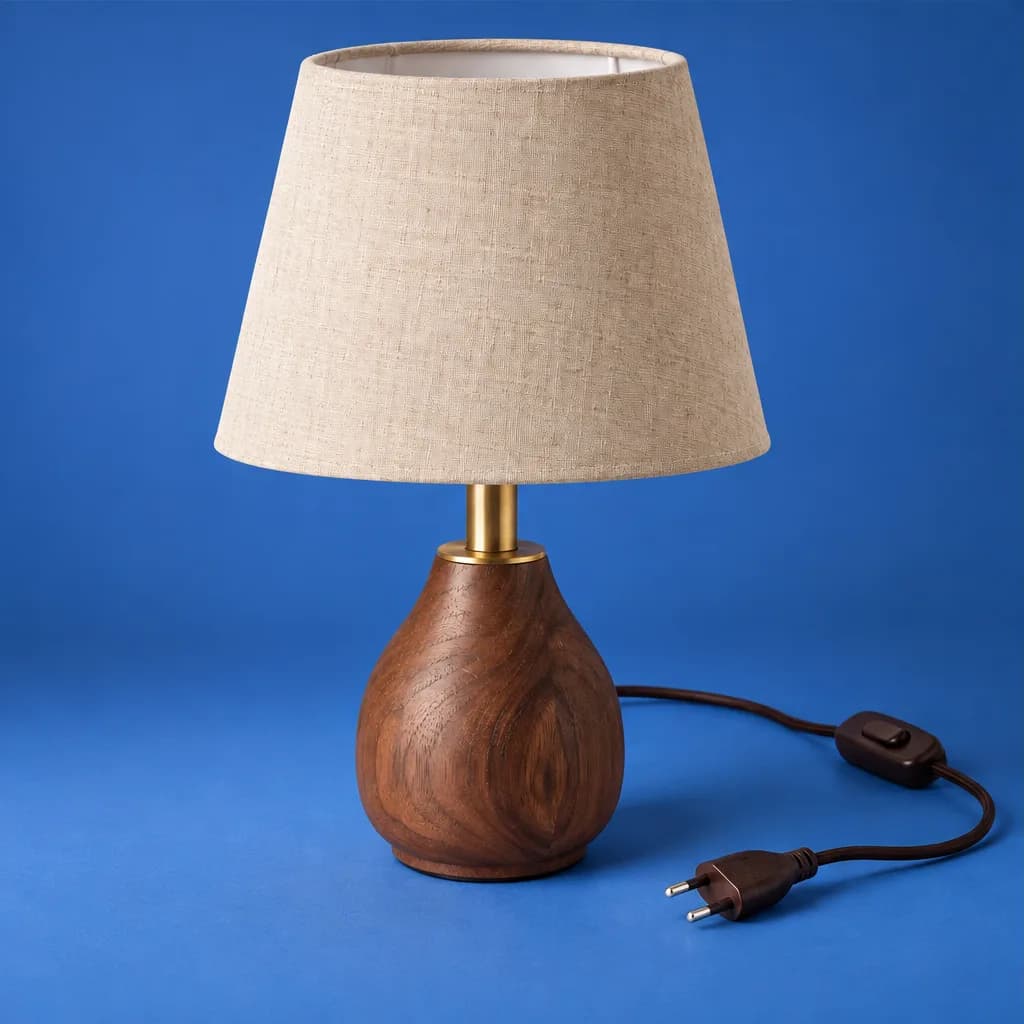
The same table lamp re-shot on a saturated blue studio backdrop
Recognize the product
The same table lamp on a wooden desk beside a window
See materials and finish
The same table lamp on a round side table beside a sofa
Imagine it in a room
The same table lamp on a wooden sideboard below framed art
Compare room placements

Decision trail

One attractive draft was still rejected.

The same table lamp on a sideboard beside a neutral gray scale cube
Rejected because the neutral scale cube implies a lamp size the Source does not confirm.
The same table lamp re-shot on a saturated blue studio backdrop
Selected because the wood grain, brass neck, and linen weave remain easy to inspect against the source photo.

Fact boundary

Visible wood-grain pear-shaped base, brass neck, tapered linen shade, and in-line cord switch.

Exact height and bulb type are not confirmed.

Re-shoot

Keep the source-grounded lamp view clear; use room placements as supporting context, and leave out scale references until the height is confirmed.

Copy and destination

A table lamp with a pear-shaped wood-grain base, a brass neck, and a tapered linen shade.

Manual marketplace package downloaded for seller upload.

Review notes

What the seller should check.

  • The source photo remains the truth anchor.
  • Each output answers a different buyer question instead of repeating the same backdrop.
  • The scale-cube draft is not used because the reference object suggests a size the Source does not confirm.
  • The seller still reviews color, proportions, details, and final marketplace fit.

Limitations

What this example cannot prove.

  • Generated results vary by source quality and product complexity.
  • The example contains no customer, conversion, ranking, or revenue claim.
  • A seller must confirm any fact that is not directly visible in the source or Source facts.